 How to Choose Between Brass, Zinc Alloy, and Stainless Steel for Metal Waterproof Cable Gland? A Complete Cost-Performance Comparison
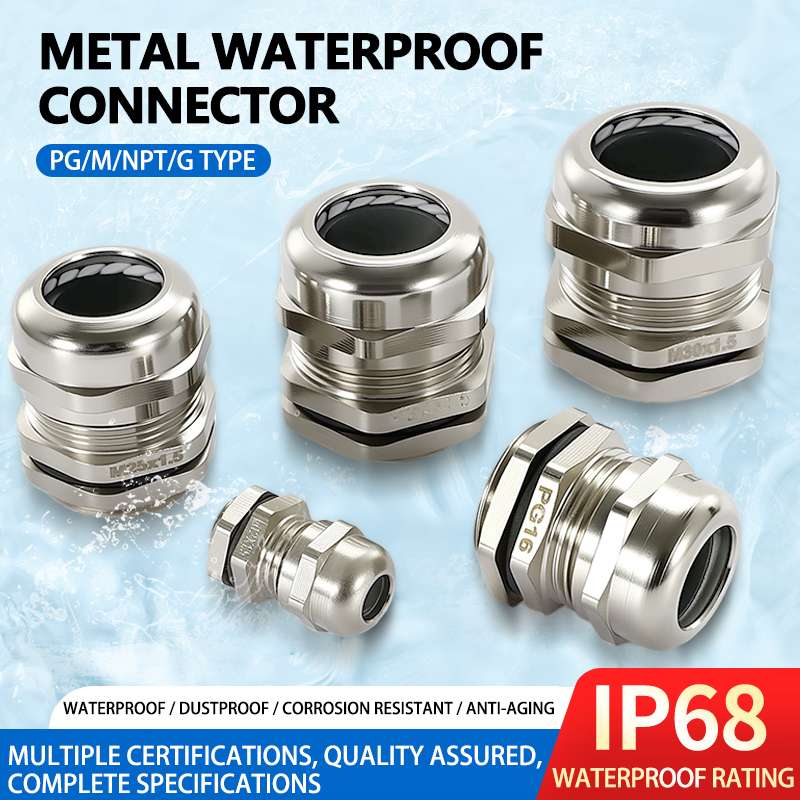
In industrial equipment and outdoor applications, the choice of waterproof connectors directly affects the safety and service life of devices. Faced with the three common materials on the market—brass, zinc alloy, and stainless steel—many buyers and engineers find themselves unsure: Which one offers the best balance between cost-effectiveness and practicality?
Brass waterproof connectors have long been the first choice in industrial applications due to their excellent overall performance. Brass offers good electrical and thermal conductivity, ease of machining, and moderate corrosion resistance. From a price perspective, brass connectors are typically mid-range—more affordable than high-end stainless steel yet more durable than zinc alloy.
Standard industrial environments, indoor electrical equipment, and outdoor settings without strong corrosive elements. If you have a limited budget but require reliable waterproof performance, brass is a safe and practical choice.
The main advantage of zinc alloy connectors is their low cost. They can be mass-produced with complex structures through die-casting processes, typically costing 20%–40% less than brass. However, this material has clear drawbacks: lower mechanical strength, poor impact resistance, and susceptibility to "white rust" (zinc corrosion) in humid environments, which limits long-term durability.
Short-term use, dry indoor environments, and non-critical applications where cost is a primary concern. It's important to note that in environments with significant temperature fluctuations or frequent mechanical stress, zinc alloy connectors may become weak points in the system.
Stainless steel waterproof connectors (especially grades 304/316) represent the premium choice, offering exceptional corrosion resistance, high mechanical strength, and excellent appearance retention. Whether in high-salt coastal areas, chemical processing environments, or industries like food and healthcare, stainless steel provides reliable long-term protection. Of course, this performance comes at a price, often 30%–100% higher than brass.
Harsh environments, high-value equipment, food and medical industries, and permanent outdoor installations. While the initial investment is higher, the total cost of ownership over the product's lifecycle may be lower.
For most standard applications, brass offers the best balance of cost and performance. It combines moderate corrosion resistance, good mechanical properties, and reasonable pricing, making it a reliable and "safe" choice.
Recommended only for short-term indoor use with strict budget constraints. When purchasing, ensure surface treatment quality and avoid using them in critical systems.
When equipment is exposed to corrosive environments or industry-specific requirements (such as food-grade certifications), stainless steel's long-term value far outweighs its initial cost.
| Material | Cost Range | Corrosion Resistance | Mechanical Strength | Best Application |
|---|---|---|---|---|
| Brass | Medium | Moderate | Good | General industrial use |
| Zinc Alloy | Low | Poor (in humid environments) | Low to Medium | Indoor, short-term use |
| Stainless Steel | High | Excellent | Excellent | Harsh/corrosive environments |
When selecting waterproof connectors, besides material, consider factors like sealing ring material, protection rating (IP code), and certification standards. A wise decision should be based on the specific application environment, expected lifespan, and total cost of ownership—not just the purchase price.
Regardless of the material chosen, we recommend sourcing from reputable suppliers and requesting material certification to ensure the product matches its described quality. The right choice will provide long-term, stable protection for your equipment connections.