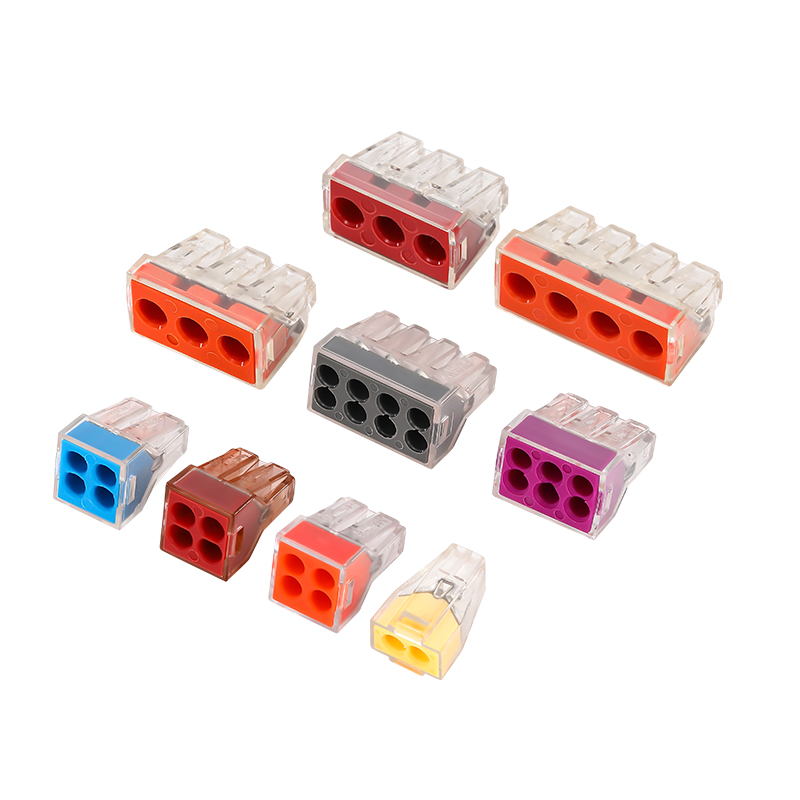
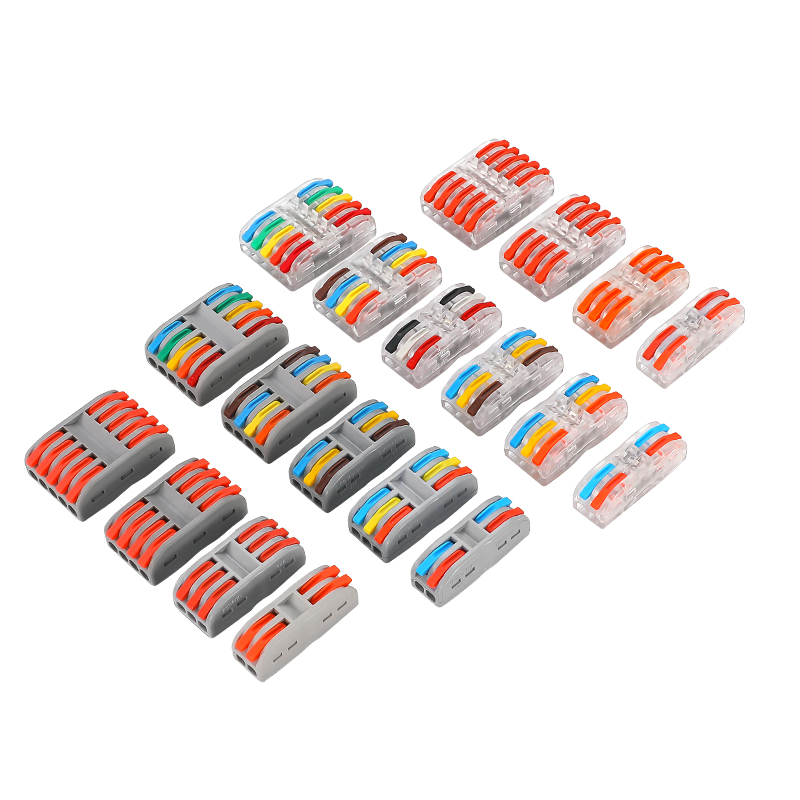
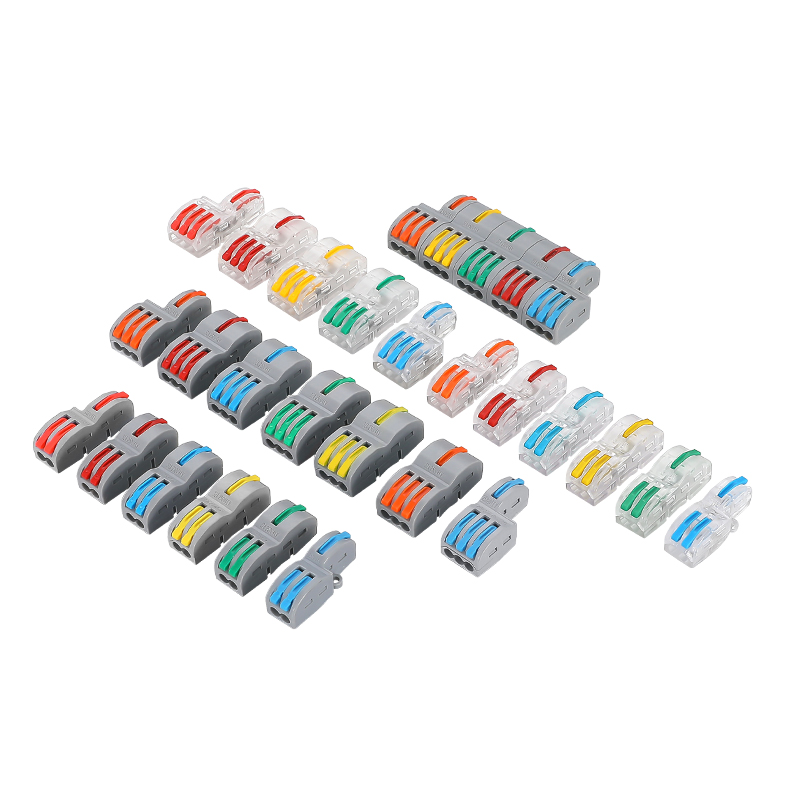
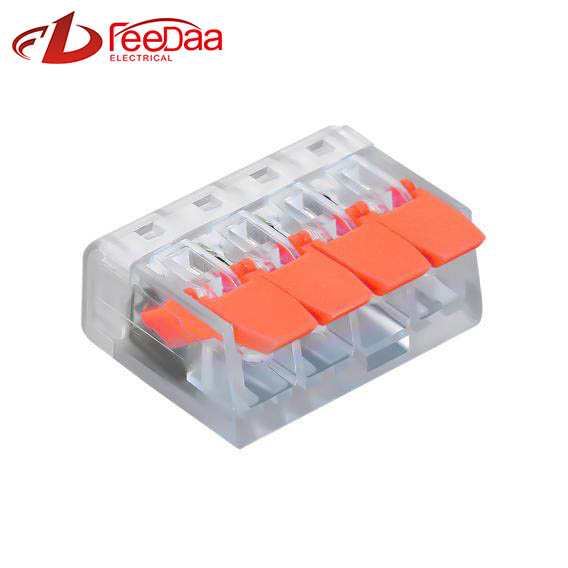
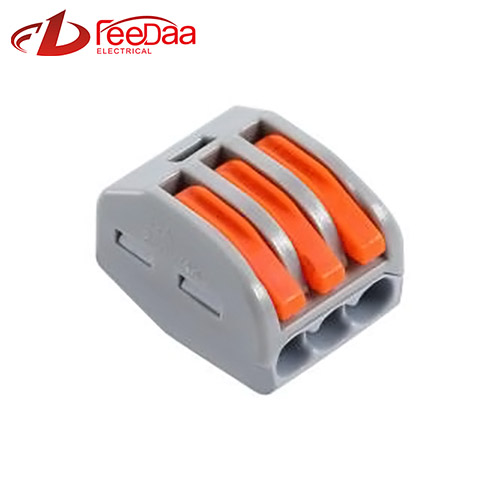
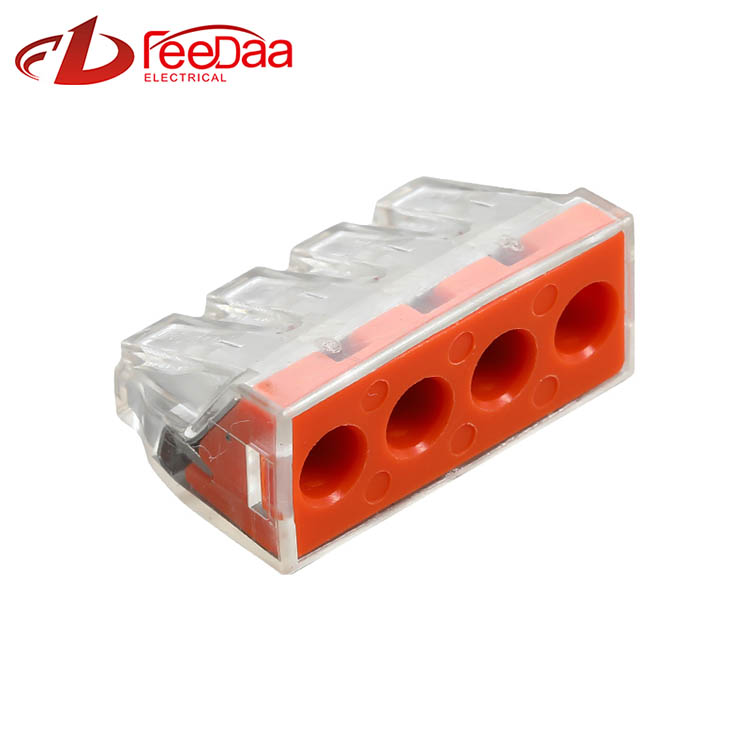
Compared to traditional screw terminals, the core differences of quick-connect terminals (spring/straight-in type) lie in tool-free quick insertion, spring constant force locking, anti-vibration and anti-loosening, low contact resistance, and reusability. Their advantages are concentrated in four major aspects: efficiency, reliability, maintenance, and safety.
1. Core differences (principles and operations)
Traditional screw terminal
Principle: The wire is compressed by tightening the screw to apply pressure.
Operation: A screwdriver is required to tighten/release the screws.
Tools: A screwdriver is required; manual torque is relied upon.
Quick-connect terminals (spring/straight insertion type)
Principle: Constant force clamping with preloaded spring (cage spring / lever).
Operation: Tool-free direct insertion / lever pressing, completed in 3 seconds.
Tools: No tools required, operate with bare hands.
II. Five key advantages
1. Efficiency soars, and labor costs plummet
Wiring speed is increased by 3-5 times, and single-shift production capacity can be increased by more than 5 times.
Newcomers can get started in 10 minutes, reducing dependence on skilled technicians.
Large-scale wiring can save approximately 82% of labor costs.
2. Reliable connection, more secure anti-vibration and anti-loosening
The spring provides constant contact pressure, compensating for thermal expansion and contraction as well as vibrational deformation
3. No damage to wires, wider compatibility
The Hengli design ensures no damage to multi-strand flexible wires and is compatible with both flexible and rigid wires (0.14–6mm²).
Traditional screws are prone to over-pressing and breaking the threads, while flexible wires require cold-pressed ends.
4. Easy to maintain and reusable
Easy to plug in/out and release with a lever, easy to disconnect and reconnect, can be reused dozens of times.
The transparent shell allows for visibility of the wiring status, and it comes with a test hole, facilitating easy maintenance.
5. Safety compliance and strong environmental adaptability
Flame-retardant shell, heat-resistant up to 105℃+, waterproof, moisture-proof, and corrosion-resistant.
The fool-proof design prevents reverse insertion and incorrect connection, achieving a yield rate of 99.4%.